Can We Restore the Marine Forest? IJTT and Yokohama National University Launch Joint Demonstration Project to Restore seaweed Beds.
In response to the issue of “Sea desertification” off the coast of Kanagawa Prefecture, IJTT Co., Ltd. and Yokohama National University have launched a joint demonstration project aimed at restoring seaweed beds.
By combining the manufacturing expertise of the company with the university’s research findings, they are exploring new possibilities for building a sustainable marine environment and promoting resource circulation.
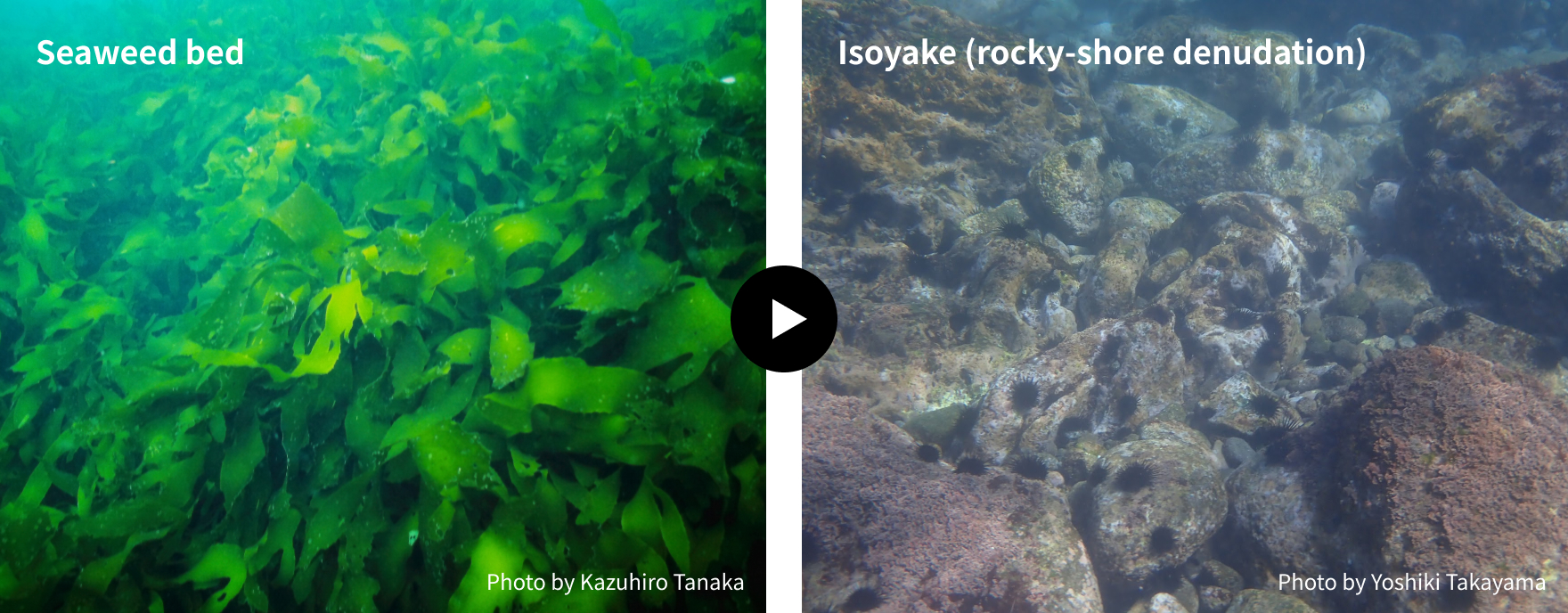
Why is seaweed bed restoration necessary now?
In the waters off the coast of Kanagawa Prefecture, a phenomenon known as ‘Isoyake (Sea desertification)’ is progressing due to factors such as rising sea temperatures, an increase in algae-eating organisms, and a decrease in nutrients.
seaweed beds not only serve as habitats and spawning grounds for fish and shellfish but are also essential to the marine ecosystem. Furthermore, they are gaining attention as “blue carbon”—a natural carbon sink that absorbs and stores CO₂.
Against this backdrop, establishing technologies to restore seaweed beds has become an urgent priority.
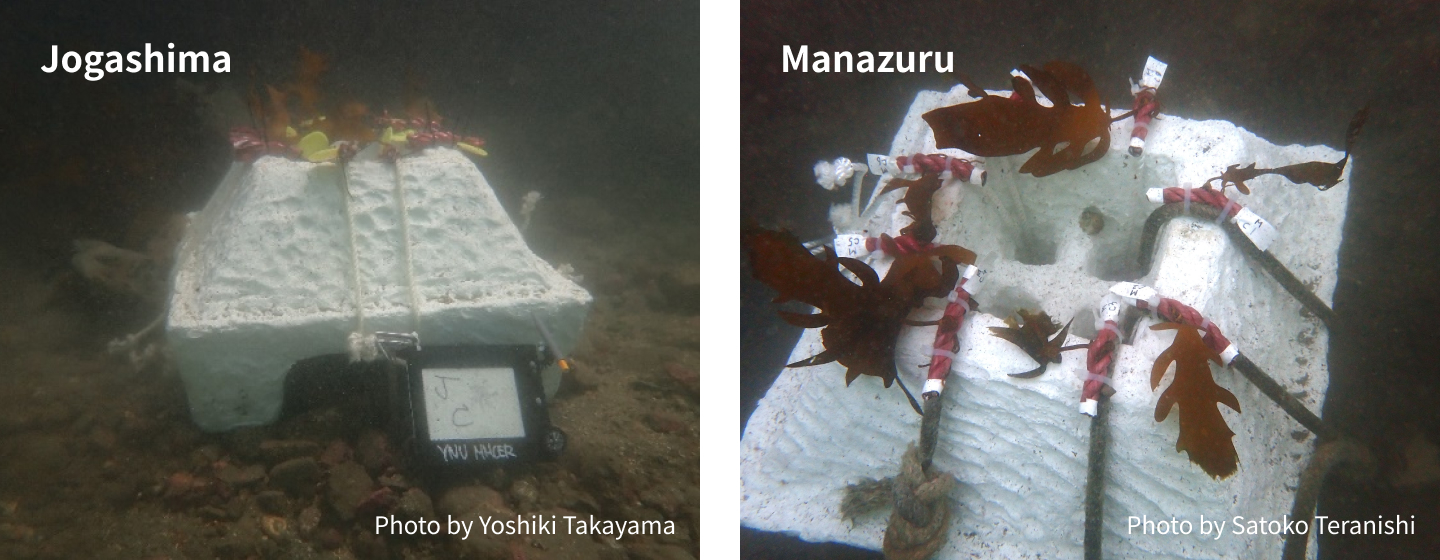
installed in actual marine areas
(Jogashima and Manazuru)
The Mechanism of seaweed Bed Restoration” Tested in the Ocean
In this demonstration project, we will conduct scientific verification to answer the questions: ‘Can seaweed beds be restored?’ and ‘Which methods are effective?’
While conducting environmental surveys in multiple areas of Sagami Bay, we are advancing the following initiatives:
-Measures against grazing damage (damage caused by fish and other organisms eating the
seaweed)
-Utilization of plant-derived materials and minerals
-Utilization of slag generated
during the casting process
-Verification of the growth of seaweeds such as kelp and
akamoku
By conducting experiments and analyses in the actual marine environment, we aim to establish reproducible technologies.
Our Role as a Manufacturing Company — Promoting Resource Circulation
At IJTT, approximately 80,000 tons of foundry sand (slag) are generated annually during the casting process.
While this material has primarily been used as a raw material for cement in the past, this demonstration project represents a new initiative to utilize it for improving the marine environment.
-Design and fabrication of materials for seaweed bed restoration
-Supply of
approximately 800 kg of slag
-Analysis of changes in the marine environment and nutrient leaching
Shaping the future of the ocean and society through industry-academia-government collaboration.
This project is a public-private-academic partnership involving universities, businesses, local governments, and the fishing industry.
In the future, we aim to use Sagami Bay as a model case and expand the initiative to other regions, with the goal of promoting it throughout society.
Furthermore, we will expand the following initiatives in the future:
-Generation and utilization of blue carbon credits
-Visualization of environmental
value through collaboration with local communities
-Building a sustainable marine environment
Our efforts to protect the ocean are connected to everything
The health of the ocean is by no means an issue that concerns only the ocean itself.
It is interconnected with forests, food, industry, and every aspect of our lives.
That is precisely why it is crucial that initiatives like this are not driven by a single sector or a select few, but rather advanced in collaboration with many people.
IJTT is committed to addressing social challenges from the front lines of manufacturing and contributing to the realization of a future where industry and nature coexist in harmony.
For more details on this matter,
please refer to this press release.